
The challenge
A UK sports nutrition brand had strong commercial foundations and a product backed by published research. It was already trusted by elite athletes and respected by sports scientists.
The next stage of growth meant reaching far beyond that core, to the much larger community of athletes at every level, from professionals to committed amateurs. Its marketing had grown up area by area, across brand, direct-to-consumer (D2C), partnerships, events, content and agency work, and now needed one clear strategy to pull it all in the same direction.
The founder wanted to know how community, partnerships and brand collaborations could grow reach and awareness, and how to make the science meaningful to people who aren't scientists. My view was that both questions had to start with a clearer understanding of the customer.
My approach
Start with the customer, not the product
Before deciding what to say or where to say it, the brand needed to understand its customers as well as it understood its science. I recommended starting with market orientation: accepting that you are not your customer, and doing the research to find out what they really think. That meant interviews with athletes across a range of sports, from professionals to committed amateurs, followed by a larger survey, to answer three questions. What problem are athletes trying to solve, whether that is a stronger finish, better training or the confidence of being well prepared? Does the product genuinely solve it, and for whom? And which groups value it most? The answers would shape the targeting, positioning and messages, which would be tested with customers before they were rolled out.
Choosing where to play
The research would show which customers to prioritise. I suggested focusing first on the endurance athletes most likely to value a research-backed product, while looking across a broader spectrum of performance sport. There were gaps the brand could own, where it could stand out rather than compete for attention with every other sports nutrition brand.
Making the research the heart of the positioning
At Frog Bikes, research was the foundation of the brand's credibility. The bikes were developed with sports scientists at Brunel University and Olympic bike engineer Dimitris Katsanis, and that gave parents, retailers and partners a reason to trust a young brand and pay a premium for it. This sports nutrition brand had the same kind of asset, with lots of credible research. I recommended making that research the centre of the brand's positioning, the main reason to choose it over competitors, rather than a technical section of the website. The proof would be visible wherever people meet the brand, through the studies, the athletes who use the product and the experts behind it.
Translating the science into benefits
Research only builds a brand when people understand what it means for them. At Frog, I turned technical detail such as shorter cranks, smaller handlebars and easy-reach brake levers into a simple message for parents: a lighter bike that properly fits your child is easier to handle, builds confidence and makes cycling more fun. I suggested the same discipline here, working from the research finding, to what it does, to what it means for the athlete, to how it feels. Messages would be tailored to each target group, from elite to first-timer, tested with customers before going into campaigns, and kept within the rules on nutrition and health claims.
Partnerships with a clear strategic role
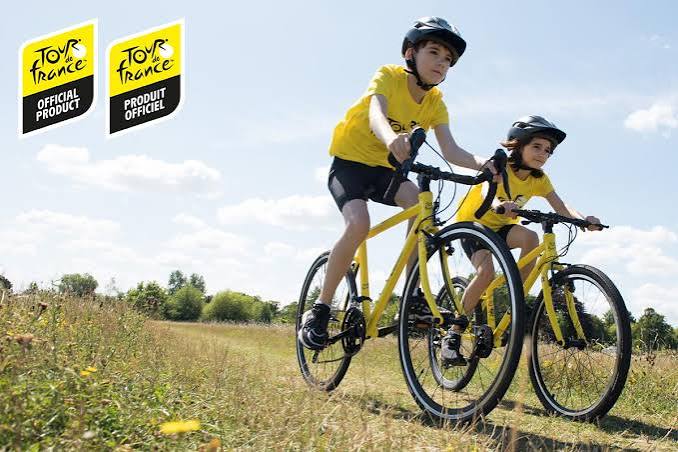
I was hired at Frog Bikes to manage the Team Sky partnership and launch the Team Sky range. Soon after British Cycling's success at the 2012 Olympics, Team Sky was at the top of its game and wanted to make its brand more accessible to families. It worked for both sides, giving Frog the awareness and PR to grow quickly in the UK and overseas. Later ranges with USA Cycling and the Tour de France opened doors with retailers and distributors, and we worked with professional cyclists to bring the brand to life for young riders and their families. For this sports nutrition brand, I recommended a portfolio of partnerships, each chosen to do a specific job: elite athletes and teams to build credibility, events to drive trial and reach, and creators, coaches and clubs to make the brand relevant every day. The portfolio would span a broad range of sports, with every partner chosen for the fit of their audience and values with the target customers, not just their profile, and measured against agreed objectives.
Building community from the grassroots up
At Frog, I led partnerships with British Triathlon and the Brownlee Foundation focused on increasing participation at grassroots level. The agreement included a fleet of Frog bikes for their events throughout the year, plus event support and PR exposure. Partnerships like these put the brand in front of children and families at the moment they were enjoying the sport, built goodwill that advertising can't buy, and showed the brand cared about getting more young people into sport, not just selling bikes. I suggested a similar approach for the endurance community: a presence at the events and clubs where athletes train and race, sampling at the moments that matter, an ambassador community of real athletes at every level, and useful content on training, racing and recovery. A strong community also gives the brand a constant source of customer insight and word-of-mouth, which feeds back into the research.
Brand collaborations
I developed and launched the Team Sky x Frog Bikes range from concept through to global launch, working with Team Sky's brand team and Frog's founders so that both brands benefited. I recommended a small number of collaborations with complementary brands, events and media, chosen to strengthen the positioning, where both partners gain new audiences and the story is more interesting together than apart.
One strategy, one plan, measured
Partnerships, events, content and D2C can easily become separate activities. I proposed bringing them under one strategy with clear objectives, balancing long-term brand building with shorter-term sales activity, and an annual plan with shared KPIs for awareness, consideration, trial, D2C acquisition and repeat purchase. Budget would go where the growth potential was greatest, and activity that didn't work would be stopped.
What I recommended
- Customer research first, to understand the problem athletes are solving and test whether the product solves it
- Clear targeting: core endurance athletes first, plus gaps in the wider performance sport market
- The research at the heart of the brand's positioning, with the proof visible wherever people meet the brand
- Science translated into clear, tested benefits for each target group
- A partnership portfolio where every partner has a clear strategic role, from elite credibility to everyday community
- One strategy, plan and scorecard across brand, partnerships, events, content and D2C
The principle behind my recommendations was diagnosis before strategy before execution. Research earns a brand credibility, but people only care about it when they can see what it means for them. Partnerships and community are an excellent way to amplify this.